
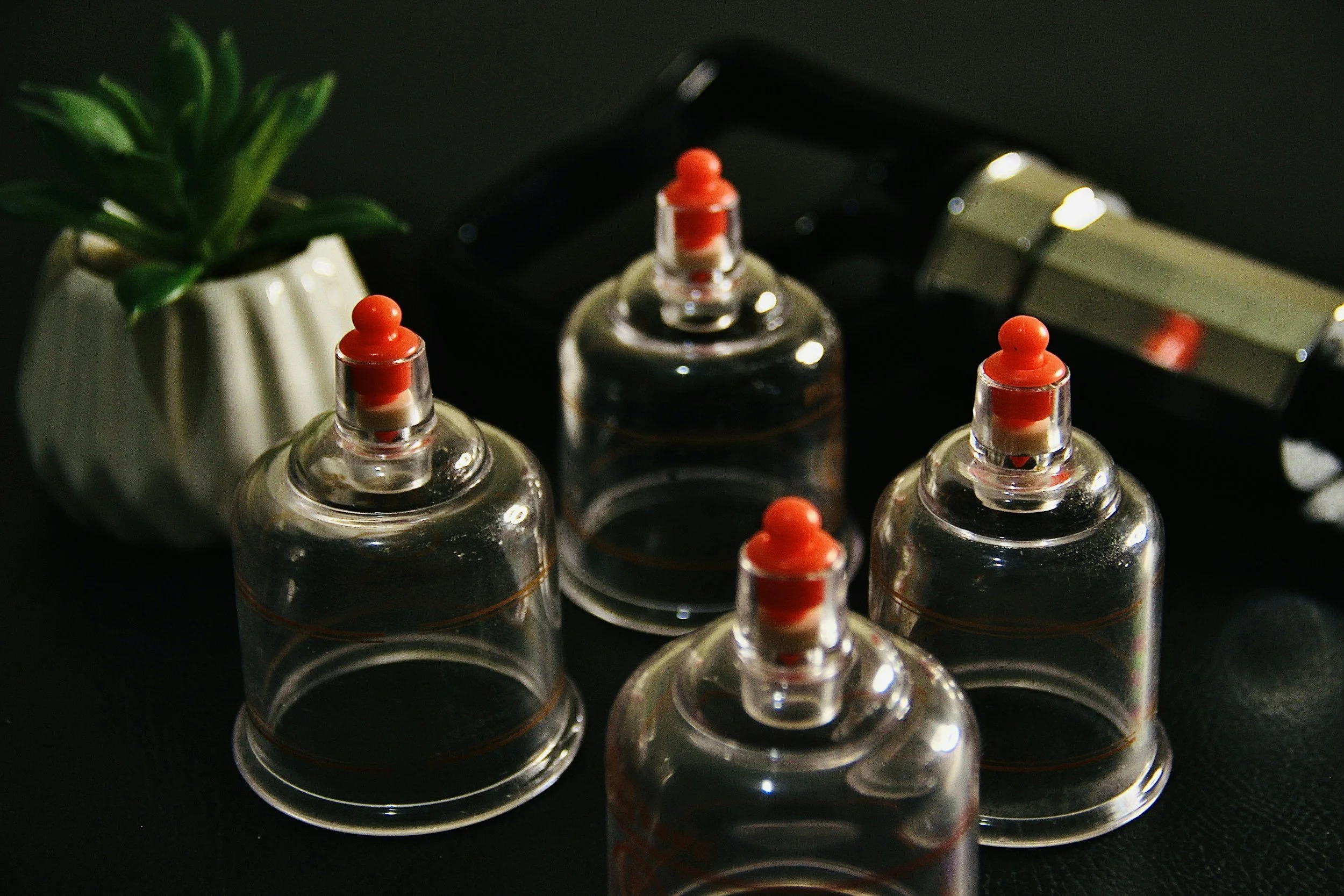
Cupping Therapy in Essex Junction, VT
Cupping therapy at Living Well Center for Integrative Health is a hands-on treatment that uses gentle suction to reduce pain, improve mobility, and support your body’s natural healing processes.
What Is Cupping Therapy?
Cupping therapy uses special cups placed on the skin to create suction, gently lifting the skin and superficial muscle layers. This negative pressure encourages fresh blood flow, loosens tight tissues, and may help draw metabolic waste toward the surface so your body can clear it more efficiently.
How Cupping Works
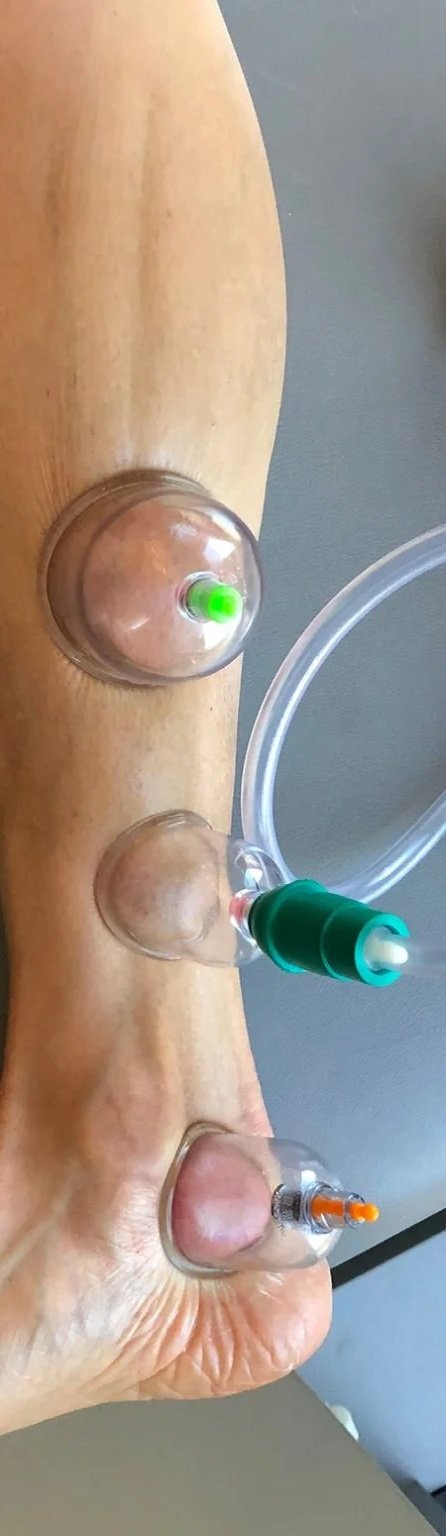
Your practitioner places cups—often plastic or silicone—on specific areas of the body, then uses a hand-held pump or heat to create a vacuum inside the cup. The cups may stay in place (static cupping) or glide over oiled skin (moving cupping), similar to a deep, reverse-pressure massage.

Ancient Roots, Modern Care
Cupping has been used for thousands of years in Traditional Chinese Medicine, where it has been a core therapy for over 2,000 years. Historical records also show cupping in ancient Egypt, including the Ebers Papyrus (circa 1550 BCE), as well as in Greek and Roman medical traditions.
Today, cupping is recognized worldwide as a complementary therapy that can be integrated with modern medical and rehabilitative care
Benefits of Cupping Therapy
Cupping can be a valuable adjunct to chiropractic care, physical therapy, and other manual therapies for pain and movement issues.
Pain Relief and Muscle Recovery
Helps relieve back and neck pain, tendinopathies, and other myofascial pain conditions.
May reduce chronic muscle tension and improve comfort after activity or injury.
Improved Circulation and Healing
Increases local blood flow to muscles and surrounding tissues, which can support tissue repair and recovery.
Supports lymphatic circulation, which may help reduce swelling and support the body’s detoxification processes.
Mobility, Stress, and Whole-Body Support
Reduces muscle tightness so nearby joints can move more freely and comfortably.
Many people report deep relaxation and decreased stress following cupping sessions.
What to Expect During Your Cupping Session
Knowing the flow of a visit can help you feel more comfortable and prepared.

Your First Visit
Your practitioner will review your health history, current symptoms, and treatment goals.
A brief physical exam or movement screen helps identify which areas may benefit most from cupping.
The Cupping Experience
Cups are placed on targeted areas like the back, neck, or shoulders, then gently suctioned to create a lifting effect.
You may feel a firm pulling sensation; many people describe it as a deep, relieving pressure rather than sharp pain.
After Your Session
Temporary circular marks or mild redness are common where cups were placed and typically fade over several days.
Your practitioner may recommend light movement, hydration, or specific stretches to support circulation and recovery.
Is Cupping Therapy Safe?
When performed by a trained professional, cupping is generally considered a safe, noninvasive therapy.
Side Effects and Precautions
Common, short-term effects include redness, circular marks, and mild soreness at treatment sites.
Cupping is not recommended over broken skin, active infection, or in certain medical conditions; your provider will review contraindications with you.
Who Should Talk With Their Doctor First?
People who are pregnant, on blood thinners, or living with complex medical conditions should consult their medical provider before beginning cupping therapy.
Always inform your practitioner about medications, implants, or recent surgeries so they can plan care appropriately.
For a detailed overview of uses, side effects, and precautions, you can read the cupping monograph on WebMD.
Our Essex Junction Location
Living Well Center for Integrative Health is located at 1 Market Place in Essex Junction, VT, serving patients from Chittenden County and surrounding communities. The center welcomes individuals of all ages, from active adults and athletes to those managing chronic pain or recovering from injury.
Schedule a Cupping Therapy Appointment
If you are curious whether cupping is a good fit for your condition, the next step is a personalized evaluation.
How to Get Started
Visit the main Living Well website to learn more about services and request an appointment: New Patient | Existing Patient
You can also explore the Physical Therapy & Rehab page to see how cupping integrates with other rehabilitative services: https://www.livingwellvt.com/physical-therapy.

Frequently Asked Questions About Cupping Therapy
-
Most people feel a firm pulling or pressure under the cups, but not sharp pain, and many describe the experience as deeply relaxing. If anything feels uncomfortable, your practitioner can adjust suction levels or cup placement.
-
Circular marks or redness from cupping usually fade within a few days to about a week, depending on skin type and treatment intensity. They are typically not bruises from impact, but rather a response to increased circulation and local tissue changes.
-
The number of sessions varies based on your condition, goals, and how your body responds to treatment. Many people notice changes within a few visits, but chronic concerns may benefit from a series of sessions integrated into a broader care plan.
-
Yes, cupping is often used alongside chiropractic adjustments and physical therapy to address muscle tension, mobility, and pain from multiple angles. Your provider will help determine when and how cupping fits best within your overall treatment plan.
-
Coverage for cupping varies by plan and whether it is provided as part of a covered service like physical therapy or chiropractic care. Contact Living Well and your insurance provider to review your specific benefits and possible out-of-pocket costs.