Back on the Golf Course: How Shockwave Therapy Can Help Chronic Achilles Tendinitis
For many golfers, walking the course is part of what makes the game enjoyable. When every step causes pain, even 18 holes with a cart can become difficult.
A 52-year-old female golfer recently came to Living Well Center for Integrative Health in Essex Junction, VT, with persistent pain around her right Achilles tendon and heel that had interfered with her game for several seasons. She had already seen an orthopedic provider, received custom orthotics, and pursued conservative care. Despite those efforts, the pain continued—and she could no longer comfortably walk the course.
This is a common story for patients with chronic Achilles problems. The good news is that an integrative approach combining shockwave therapy with chiropractic care and physical therapy can help many people regain function and return to the activities they love.
Why Achilles Tendon Pain Becomes Chronic
The Achilles tendon is the large, strong tendon connecting the calf muscles to the heel bone. It absorbs tremendous forces during walking, climbing stairs, running, and sports like golf.
Achilles tendinopathy (often still called Achilles tendinitis) develops when the tendon is repeatedly overloaded and does not fully recover. Once the condition becomes chronic, the issue frequently involves more than simple inflammation. Structural and degenerative changes can occur within the tendon itself. This helps explain why approaches focused mainly on reducing inflammation often fall short for long-standing cases.
That is one reason we may recommend shockwave therapy (extracorporeal shockwave therapy or ESWT) for certain chronic tendon conditions at Living Well VT.
What Is Shockwave Therapy?

Shockwave therapy, also known as extracorporeal shockwave therapy (ESWT) or acoustic wave therapy, delivers focused or radial acoustic energy to the injured area.
It is noninvasive—no needles, no incisions, and typically little to no downtime. Research supports its use for stubborn musculoskeletal conditions, including chronic Achilles tendinopathy and plantar heel pain.
The goal is not temporary pain masking. Shockwave therapy aims to stimulate a biological healing response in chronically irritated tissue, supporting the body’s natural repair and remodeling processes. It can increase local blood flow, influence cellular activity, and help address the degenerative changes that keep chronic tendinopathy stuck.
Treating the Whole Lower Extremity—Not Just the Painful Spot
At Living Well Center for Integrative Health, we never look at the Achilles tendon in isolation. We evaluate how the foot, ankle, calf, knee, and entire lower extremity function together.
Restricted ankle motion, calf tightness, altered foot mechanics, weakness, and changes in gait all increase stress on the Achilles. For our golfer patient, treatment combined shockwave therapy with a coordinated chiropractic and rehabilitation approach designed to address the mechanical factors contributing to her symptoms.
Our objective was clear: reduce pain, improve function, and help her return to walking the course and enjoying golf again. This matches our broader philosophy—lasting relief comes from treating the person and the movement system, not just the symptomatic spot. Learn more about our chiropractic care and physical therapy approaches.
We also have a Nationally Certified Golf Performance Therapist on the team (Alice Goodrich, MSPT), which makes us especially well-equipped to support golfers recovering from lower-extremity issues and returning safely to play.
Getting Back to Golf and Everyday Life
One of the most rewarding parts of this work is seeing someone regain an activity they had gradually given up. For this patient, Achilles pain had not only caused a sore foot—it had changed how she played golf and prevented her from comfortably walking the course.
Her case illustrates why we continue offering effective options for patients who feel they have already “tried everything.” Shockwave therapy is not appropriate for every patient or every type of foot and ankle pain. For certain chronic tendon problems—especially when traditional conservative care has not provided adequate relief—it can be a valuable part of an integrative plan.
Could Shockwave Therapy Help Your Achilles or Heel Pain?
If you have dealt with Achilles or heel pain for months (or years), you do not have to assume it is something you simply have to live with.
At Living Well VT in Essex Junction, we evaluate the entire lower extremity to understand why the tendon is being overloaded and whether treatments such as shockwave therapy, coordinated with physical therapy and chiropractic care, may be appropriate. Our goal is not just temporary improvement in the office—it is helping you get back to walking, golfing, hiking, exercising, and doing the things you enjoy.
Individual results vary. An examination is necessary to determine the cause of your pain and the most suitable treatment plan. New patients can start here or call us at 802-658-6092.
Common Questions About Shockwave Therapy for Achilles Pain
Does shockwave therapy hurt?
Patients may feel tapping, pressure, or temporary discomfort during treatment, especially over a sensitive area. Intensity is usually adjustable based on your tolerance.
How many treatments are needed?
The number of sessions varies with the condition, how long it has been present, and individual response. Many patients notice meaningful improvement within a course of sessions (often in the range of several treatments).
Is there downtime?
One advantage of shockwave therapy is that it is noninvasive and generally does not require the downtime associated with injections or surgery. Most people resume normal daily activities quickly, with guidance on activity progression.
Do I still need exercises or physical therapy?
Often yes. Chronic Achilles problems respond best when shockwave therapy is combined with appropriate mobility work, progressive tendon loading, strengthening, and correction of contributing biomechanical factors. We frequently pair shockwave with physical therapy for comprehensive evaluation and recovery. Explore our physical therapy services, including options tailored for golfers and active adults.
Is shockwave therapy right for me?
It is best considered after a thorough evaluation. It is particularly useful for chronic tendinopathy that has not fully responded to other conservative measures. Our team will discuss whether it fits your specific situation as part of an integrative plan.
At Living Well Center for Integrative Health, we combine chiropractic care, land-based and aquatic physical therapy, and advanced modalities like shockwave therapy under one roof in Essex Junction, Vermont. Our focus remains the same: lasting pain relief, improved mobility, and helping you live well.
Ready to take the next step? Contact us to schedule an evaluation and find out whether shockwave therapy and our integrative approach could help you get back on the course—or simply walk without pain again.
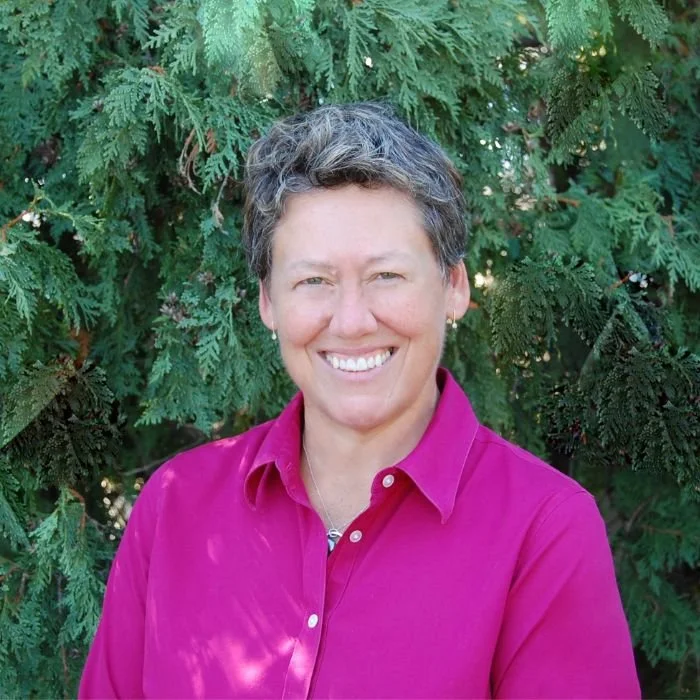
TIFFANY RENAUD, DC
Dr. Tiffany Renaud received her Doctorate degree in August of 1991 when she graduated from the National College of Chiropractic in Lombard, Illinois. She began her college education with an undergraduate degree in Human Biology and an Associate’s degree in Radiologic Technology. She has numerous continuing education credits in nutrition, homeopathy, musculoskeletal rehabilitation, women’s health, and sports medicine.