
Post‑Surgical Knee Rehab Case Study — Returning to Gardening and Play
By Hannah Munn, DPT | Living Well Center for Integrative Health | Essex Junction, Vermont
Case Study: Returning to Gardening and Play After Knee Surgery
Clinician: Hannah Munn, DPT
Patient: 62-year-old Williston resident
Primary concerns: Post-surgical knee weakness, limited balance, and compensatory low back pain
Before Care at Living Well
After knee surgery, this patient was unsure whether they would ever regain the strength and balance needed to return to the activities they loved. Getting up and down from the ground felt risky, uneven surfaces were intimidating, and by the end of the day their back often hurt more than their knee. They worried that gardening on hillsides and actively playing with their grandchildren might no longer be realistic goals.
Collaborative Evaluation
When the patient came to Living Well Center for Integrative Health, Hannah Munn, DPT, completed a thorough evaluation of knee range of motion, strength, balance, walking mechanics, and functional tasks like squatting and stair negotiation. At the same time, one of Living Well’s chiropractors assessed compensatory low back and pelvic strain that had developed as the patient protected the surgical knee. Evidence supports the use of structured postoperative rehabilitation—with attention to balance, strength, and functional tasks—to improve mobility and daily function after knee surgery.
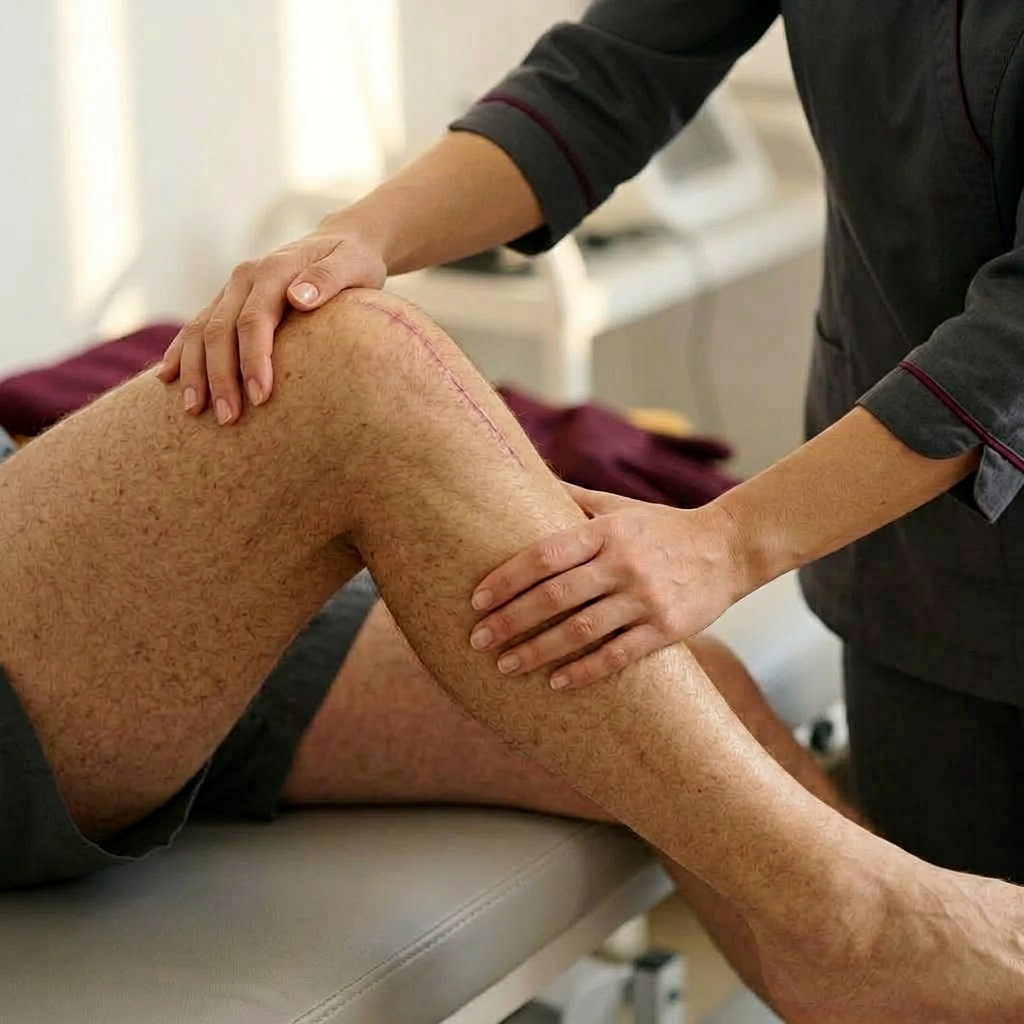
Together, the team and patient set clear goals:
Walk on hills and uneven ground without fear
Garden comfortably, including getting up and down from the ground
Play safely and confidently with grandchildren
Progressive Rehab and Aquatic Therapy

Aquatic therapy was introduced as a complement to land-based work. Hydrotherapy allowed the patient to perform weight-bearing exercises at reduced joint load — buoyancy decreasing effective body weight by approximately 50% at waist depth — enabling earlier and more aggressive strengthening work than would have been tolerable on land. Research published via NIH/PubMed supports aquatic therapy following total knee arthroplasty for improving range of motion, reducing pain, and accelerating return to functional activity. The Arthritis Foundation similarly recognizes aquatic exercise as an effective modality for joint replacement recovery.Sessions focused on gait normalization in water, closed-chain strengthening, and hip and core stabilization.
On land, sessions emphasized:
Gradual strengthening of the quadriceps, hips, and core
Targeted balance training to improve confidence on uneven surfaces and slopes
Gait training to normalize stride and reduce compensatory stress on the back
Chiropractic care addressed spinal and pelvic mechanics to reduce low back pain related to months of altered movement patterns. This integrative approach aligns with evidence that combining strengthening and balance exercises in postoperative rehab can improve knee range of motion, balance, gait, and functional outcomes after knee replacement.
Hannah Munn, DPT coordinated the overall plan of care, ensuring that land-based rehab, aquatic therapy, and chiropractic interventions were sequenced and progressed in alignment with one another. *
*For a related example of multimodal integrative care, see our vestibular physical therapy case study.

Outcomes That Mattered to the Patient
Over the course of care, the patient noticed steady changes:
Walking on hills and grass felt more stable and less painful
They could squat, kneel with support, and return to standing more easily in the garden
Low back discomfort decreased as gait and loading became more symmetrical
By the end of their rehab episode, the patient had returned to gardening on sloped terrain, taking hill walks, and playing actively with their grandchildren—activities they previously believed might not be possible after surgery. These gains mirror findings that aquatic and land-based rehabilitation can meaningfully improve pain, function, and mobility for people recovering from knee surgery and living with knee osteoarthritis.
This case highlights how coordinated care at Living Well—combining post-surgical knee rehab, aquatic therapy, and supportive chiropractic treatment—can help patients move beyond basic recovery and return to the life activities that matter most.

Privacy Notice: All case studies are fully anonymized and represent common conditions treated at Living Well. Identifying details have been generalized to protect patient privacy while highlighting real-life improvements for patients in the greater Chittenden County area.