
How Vestibular Physical Therapy Helped a Vermont Patient Overcome Vertigo and Migraines
Living Well Center for Integrative Health – Essex Junction, VT
Practitioner: Dr. Kristin Robinson, DPT

Who Is Kristin Robinson, DPT, and What Role Does She Play in Vestibular Rehab in Vermont?
Kristin Robinson, DPT, is a highly qualified physical therapist specializing in vestibular rehabilitation. With extensive training in this field, she plays a crucial role in helping patients navigate their recovery from balance disorders. Her expertise allows her to tailor treatment plans that address the unique needs of each patient, ensuring effective outcomes. LEARN MORE ABOUT DR. ROBINSON →
Case Study: Vertigo, Migraines, and a Return to Daily Life
Patient: 42-year-old Chittenden County resident.
Primary concerns: Recurring vertigo, dizziness, and migraines that disrupted work, driving, and sleep.
Background
By the time they came to Living Well Center for Integrative Health, this patient was struggling to get through a full workday without an episode of spinning, disorientation, or migraine pain. Driving felt unsafe, sleep was frequently interrupted, and outdoor activities they once enjoyed now triggered anxiety and discomfort. These symptoms are consistent with vestibular disorders, which affect the inner ear and brain areas that control balance and spatial orientation and often present with vertigo, dizziness, and imbalance.
Dr. Kristin Robinson, DPT coordinated a plan for vestibular-focused physical therapy that also included chiropractic care and postural restoration® techniques. Physical therapists are recognized by the American Physical Therapy Association as practitioners of choice for the rehabilitation and management of people with vestibular-related balance disorders.
Evaluation at Living Well
During the initial evaluation, Dr. Robinson took a detailed history of the patient’s vertigo, migraine patterns, triggers, and functional limitations. She performed a focused vestibular and balance assessment to better understand how head and eye movements, position changes, and postural demands contributed to symptoms, consistent with recommended approaches for vestibular disorders.
The patient’s goals were clear:
Return to full workdays without fear of sudden dizziness
Drive with confidence again
Get back to outdoor activities such as walking and spending time with family
Coordinated Treatment Plan
The care team developed an integrated plan that included:
Chiropractic care to address cervical and postural contributors to dizziness and headache, and to support more efficient movement patterns.
Vestibular-focused physical therapy with Dr. Robinson, emphasizing exercises that gradually challenged the vestibular system, balance, and gaze stability in a controlled, progressive way, consistent with evidence supporting vestibular rehabilitation for dizziness and imbalance.
Postural restoration techniques to improve alignment, breathing patterns, and muscle balance, supporting better control of head and neck position during daily activities.
Vestibular rehabilitation is a form of physical therapy that uses tailored exercises to reduce dizziness, improve balance, and increase confidence in movement for people with vestibular disorders, including vestibular migraine.
Physical Therapy Approach
In physical therapy sessions, Dr. Robinson focused on:
Gradual exposure to head and body movements that previously provoked dizziness, allowing the vestibular system and nervous system to adapt over time
Balance and gait training tasks that mimicked real-life situations such as walking on uneven ground or turning the head while moving
Education on how vestibular disorders affect balance and why certain movements or environments could temporarily increase symptoms, drawing on principles outlined in vestibular disorder resources.
Strategies for pacing, activity planning, and recovery so the patient could continue home exercises safely between visits
The plan followed clinical guidance that supports supervised vestibular rehabilitation and a consistent home exercise program, with frequency and duration adjusted to symptom severity and functional goals.
Outcome
Over the course of care, the patient reported:
A noticeable decrease in the intensity and frequency of vertigo episodes
Less frequent migraines interfering with work and sleep
Improved confidence with walking, turning the head, and moving in busy visual environments
By the end of their treatment episode, the patient was able to:
Complete full workdays with significantly fewer interruptions from dizziness or migraine symptoms
Resume driving without the same level of fear or disorientation
Return to favored outdoor activities with family, feeling steadier and more secure in their balance
These changes align with published findings that vestibular rehabilitation can reduce vertigo frequency, improve balance, and decrease disability in people with vestibular migraine and other vestibular disorders.
Living Well’s Integrated Approach
This case reflects how coordinated care at Living Well Center for Integrative Health can support patients dealing with complex conditions such as vertigo and migraines. By combining chiropractic care, vestibular-focused physical therapy, and postural restoration under the guidance of clinicians like Dr. Kristin Robinson, DPT, patients receive a structured, evidence-informed plan that addresses both symptoms and function, helping them return to the work, driving, and outdoor activities that matter most in daily life.
For more information on Vestibular Physical Therapy, read below.

What Is Vestibular Physical Therapy and How Does It Treat Vertigo and Migraines?
Vestibular physical therapy is a specialized form of rehabilitation that addresses balance disorders and dizziness, particularly those caused by vestibular system dysfunction. This therapy has proven effective for patients suffering from vertigo and migraines, offering a pathway to recovery through targeted exercises and techniques.
How Does Vestibular Therapy Improve Balance and Reduce Dizziness?
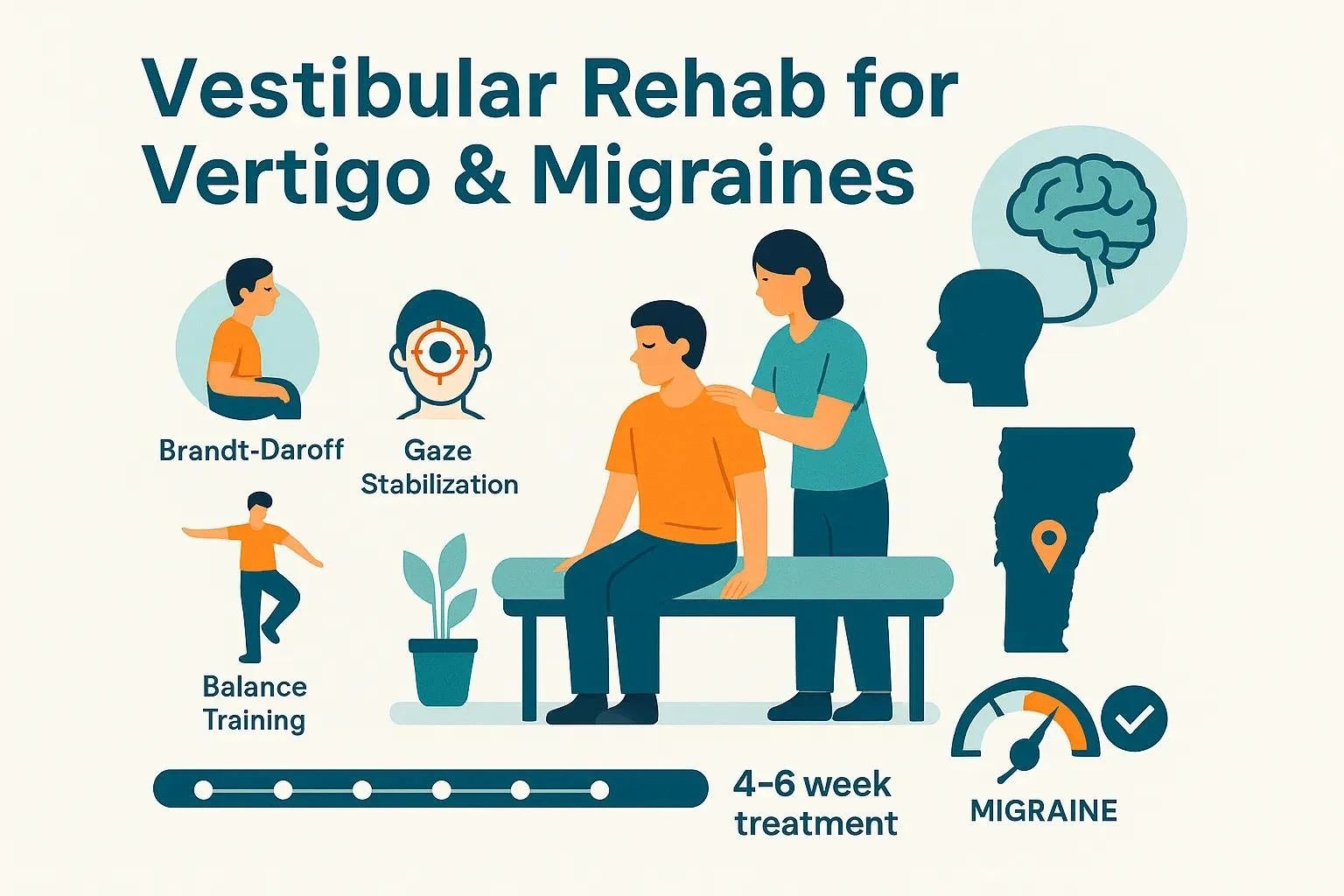
Vestibular therapy improves balance and reduces dizziness through a series of targeted exercises that stimulate the vestibular system. These exercises often include head movements, balance training, and coordination tasks that challenge the patient's stability. For instance, exercises like the Brandt-Daroff maneuver and gaze stabilization exercises are commonly used to help patients adapt to their symptoms. Research indicates that these exercises can lead to significant improvements in balance and a reduction in dizziness, enhancing the patient's overall quality of life.
What Are the Common Vestibular Exercises Used for Migraine and Vertigo Relief?
Common vestibular exercises include:
Brandt-Daroff Exercises: Designed to help patients adapt to vertigo by repeatedly moving from a sitting to a lying position.
Gaze Stabilization Exercises: Focus on improving the ability to maintain visual focus while moving the head.
Balance Training: Involves standing on one leg or walking in a straight line to enhance stability.
These exercises not only alleviate symptoms but also empower patients to manage their conditions more effectively.
How Does Postural Restoration Therapy Support Vertigo and Migraine Recovery?
Postural Restoration Therapy (PRT), as utilized by Kristin Robinson, DPT, is a vital component of the comprehensive treatment approach for vertigo and migraines. This therapy focuses on identifying and correcting postural imbalances that contribute to vestibular strain and trigger migraine episodes. By addressing asymmetries in muscle function and alignment, PRT reduces undue stress on the vestibular system, promoting more efficient balance and neurological function.
Kristin Robinson integrates PRT techniques to realign the pelvis, rib cage, and cervical spine, which are often areas of dysfunction in patients with vestibular disorders. Correcting these imbalances helps to normalize sensory input to the brain, decreasing the frequency and intensity of vertigo and migraine symptoms. This approach complements vestibular-focused physical therapy and chiropractic care, creating a holistic pathway to recovery that supports long-term symptom management and improved quality of life.
Privacy Notice: All case studies are fully anonymized and represent common conditions treated at Living Well. Identifying details have been generalized to protect patient privacy while highlighting real-life improvements for patients in the greater Chittenden County area.